


05 Jun “Stability is the foundation of our growth”
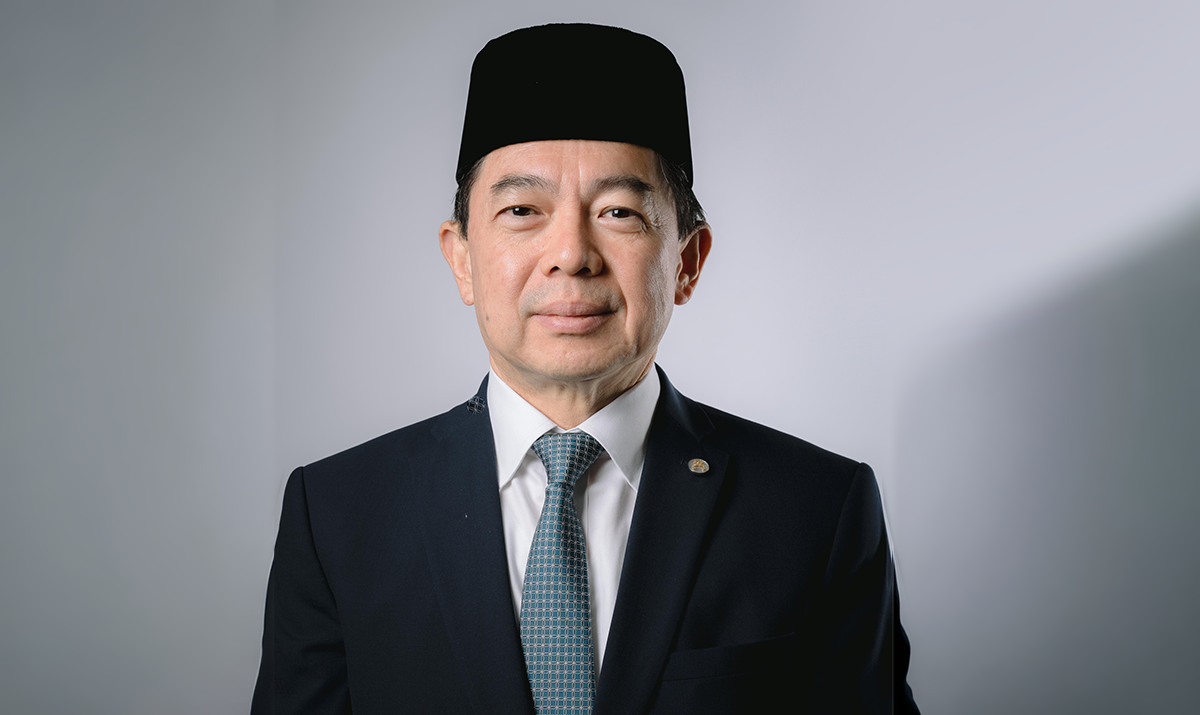
Interview with H.E. Dato Seri Setia Dr Awang Haji Mohd Amin Liew Abdullah, Minister at the PM’s Office and Minister of Finance and Economy II, Brunei
With GDP growth hitting a five-quarter high of 4.5% in late 2025, how will you ensure this momentum shifts from industrial carbon production to the lagging services and non-oil sectors?
We are very excited about the economic development that we are seeing today. Building on the work that we have done over the last 10 years or so, we have been able to achieve better GDP growth than we did many years ago. This growth has been driven by our focus on five priority sectors: downstream oil and gas, food, ICT, services, and tourism.
Each sector grows at a different pace. Over the last 10 years, much of the growth has come from downstream oil and gas, but that does not mean the other sectors have been neglected. In the food sector, for example, we have made significant progress in both aquaculture and agriculture. Of course, in terms of value, downstream oil and gas involves much larger investments compared to aquaculture, so these efforts are often overshadowed by major projects such as oil refineries, fertilizer plants, urea and ammonia facilities, methanol plants, and so on.
However, we have been focusing strongly on increasing the GDP contribution from the non-oil and gas sector. Over the last 10 years, we have seen very positive progress. Ten years ago, the non-oil and gas sector accounted for around 45% of GDP. Today, it is closer to 53–55%. The same trend can be seen in exports. Ten years ago, non-oil and gas exports accounted for less than 10%, while more than 90% came from oil and gas. Today, the balance is closer to 60% non-oil and gas exports and 40% oil and gas.
These are all very positive signs of momentum in the non-oil and gas sector overall. As you rightly noted, some sectors are still lagging behind while others are moving ahead strongly. However, we do not look at GDP on a quarter-to-quarter basis. As an economy that is still diversifying, we take a longer-term view.
Since our economy is not yet fully diversified, we continue working toward that goal. Ten years ago, we were highly concentrated. Today, we are more moderately diversified, though not yet fully so. Overall, we are clearly moving in the right direction. Of course, in today’s structure, if a refinery undergoes turnaround maintenance, it can have a significant impact on GDP growth. But as we become more diversified, the impact of such events – like maintenance at a single refinery or plant – will become much less visible.
Exactly. And the 2026–27 budget includes a BND $2.72 billion deficit. What specific high-impact projects under the 12th National Development Plan are designed to close this gap by 2030?
Well, we are conscious of that, and fiscal consolidation is a very important agenda for us. I would not say that we look specifically at the National Development Plan to address the budget deficit, because we also have other programs that address this issue.
But regarding the National Development Plan, what we do is guided by Brunei Vision 2035, Wawasan Brunei 2035. We have budgets set aside for social welfare, education, economic diversification, and general infrastructure such as electricity and water. If you look at our National Development Plan, the allocation for economic diversification is not as high as education and some other sectors. That is because when we drive our economy, it is not purely through the government budget.
Some funding comes from the government, for example, in preparing industrial sites and infrastructure such as airports and seaports. However, much of our economic diversification is driven by foreign direct investment, private sector capital, external financing raised overseas, and government-linked companies playing their part in advancing the diversification agenda. We do have a fiscal consolidation program to address the deficit, as many activities and services traditionally provided by government ministries are being corporatised, as is the case in many other countries.
This allows these services to become more efficient and less reliant on government budgets for infrastructure and public services. It serves two purposes: reducing fiscal pressure on the government while enabling the use of private capital, and improving efficiency, discipline, and accountability. Public-private partnerships are also part of this journey. We have already implemented several, and the outcomes so far have been very positive. We will continue to pursue this in the years ahead.
I’d like to ask about your upcoming 2026 mission to the UK. How will the Brunei Green Economy Framework integrate areas such as late-life asset management and decommissioning into the country’s broader sustainability strategy? And also, if you prefer, we could also discuss the next phase of the Digital Economy Master Plan and the priorities moving forward.
Starting with the green economy, we are very thankful to the Government of the United Kingdom for working with us to identify areas where Brunei has the capacity to deliver. Like many countries, we are moving toward renewable energy. More specifically for Brunei, this includes carbon capture, utilization and storage, as well as the development of a hydrogen hub linked to our oil and gas industry.
You also mentioned late-life asset management and decommissioning. These are areas we are actively exploring as well. In fact, we launched an industry focused on decommissioning work just a month ago. Another area is waste recycling, where we are actively developing projects. In about a year’s time, we should be ready to embark on these initiatives.
Studies under the Brunei Green Economy Framework show that there are several things we need to put in place before fully moving forward. We need to establish the right policies and legislation, especially for areas such as waste-to-energy, to ensure proper regulation and effective collaboration between the public and private sectors.
Then there is the issue of funding. Should the government fund everything, or should we work through partnerships with private capital? In my view, partnerships are very important, because many green economy projects are more technical and sophisticated than traditional projects. We need strong partnerships that bring not only technical expertise, but also funding.
And, of course, we need to train our people. Capacity building is essential. Without that, we will not be successful. These are some of the outcomes from the Brunei Green Economy Framework developed together with the UK government.
Regarding the digital economy, our Digital Economy Master Plan 2025 has now expired, and we are launching a new five-year plan. If you look at what we achieved over the last five years, we significantly improved connectivity. We rolled out 5G, and today slightly over 90% of populated areas have access to it. As for 4G, coverage reaches about 99% of populated areas.
When we measure mobile speed, Brunei has ranked among the top 10 globally over the past couple of years, and two months ago we were ranked in the top five worldwide. I am personally very impressed with these improvements in connectivity. However, this is something we must continue to invest in, because strong connectivity is essential for developing and enabling a digital economy.
Now that the connectivity infrastructure is in place, over the next five years we want to encourage people to develop applications. We also want to continue building an AI data center. Of course, we understand that this requires a significant amount of power, so that is part of our planning. We are already beginning to roll out digital IDs for the entire population. We are also almost ready for digital payments. Not only within the country, but also cross-border digital payments, especially within ASEAN, to encourage more intra-regional trade.
Another initiative is our AI-powered digital health management platform. This effort began during the COVID-19 period with a contact tracing application. After COVID, we expanded it into a broader digital health management platform. This platform was presented at Davos earlier this year, and a paper was produced on it. I recently spoke with my colleague in the Ministry of Health, and they have been invited to share their experience with other governments. We are very proud of this achievement, but we also want the private sector to become more involved. The government alone cannot digitalize everything. We hope that with improved connectivity and internet costs now roughly three times lower than before, we will continue to see success in this area.
Brunei recently ranked 43rd in the Global Talent Competitiveness Index 2025. How is the Ministry leveraging human capital advantages to attract tech-centric FDI over regional competitors?
This is an ongoing effort and a moving target. Our ranking in the Global Talent Competitiveness Index is a useful measure of where we stand, but as technology continues to advance, we must keep ourselves up to speed.
A few years ago, working with our local universities, the government funded courses in data analytics, digitalization, and related areas. I mentioned the healthcare platform earlier, and we now have scientists from that company going into universities to share their experience so graduates can become immediately applicable in industry. That is very important.
But of course, digitalization and AI are not the only areas we need to focus on. Today, we also have key industries such as downstream oil and gas, as well as a food sector that is still emerging. Hopefully, within the next two to three years, we will see more activity in that space. This also means we need to ensure our local population is equipped with the right skill sets.
Part of my responsibility in the Prime Minister’s Office is manpower planning. We need to continue upgrading our people, not only at school level, but also after university, through upskilling and reskilling opportunities. As we all know, AI is going to change many jobs. We are living in a very different world today, and we must continue learning and upgrading ourselves.
Brunei also rose to 13th globally in the Islamic Finance Development Indicator. What is the next leapfrog move to break into the global top 10 by 2028?
This is an interesting area because we see ourselves as strong in Islamic finance. We cannot compete with larger countries in conventional finance, but we believe we have strong Islamic financial knowledge and capabilities. Hopefully, we will continue working toward a top 10 ranking. But whether we reach the top 10 or top 5 is less important – these are simply targets. What matters is the motivation to continuously improve our products and services. This also requires development not only on the supply side, but also on the demand side. As we diversify our economy, there will naturally be more demand for Islamic finance products. The key is how we can link the two together, and in doing so, help us over time build even more sophisticated products and capabilities in Islamic finance. And of course, perhaps one day we may even have our own stock exchange, which would further strengthen and create even more momentum in what we are trying to achieve in the financial sector.
While the manufacture of petroleum and chemical products faces volatility in 2025, how is Brunei pivoting its downstream strategy to include higher-value chemicals?
What we are doing in our roadmap today is continuing to move further downstream. We already have refineries, petrochemicals, ammonia, urea, and methanol plants producing more products. These products can become feedstock for new chemical plants. We are already seeing positive outcomes. For example, our refinery produces benzene, our fertilizer plant produces ammonia, and our methanol plant produces methanol. Combined with carbon monoxide, these products can create formic acid and other chemical derivatives. This allows us to move further downstream into manufacturing industries. Hopefully, in the not-too-distant future, we will see manufacturing of household products such as textiles, carpets, wall panels, and similar items. For example, the fertilizer plant can also produce formaldehyde for furniture manufacturing.
Whether these are considered high-value chemicals or not, what is important is that they create more economic activity around essential household goods. This will support job creation, encourage technology transfer, and help us move into more sophisticated industries over time. At the moment, our focus is to diversify the economy as quickly as possible, create good jobs for our people, raise salary levels, and ensure technology transfer to local talent. Then we can become more selective about future industries.
That seems to reflect the key message for our readers – Brunei’s position as a stable gateway for investors. Is there anything you would like to add?
Today, one of the most important things investors look for in a destination is stability. They want a stable government and policies that are consistent and predictable. If you look at Brunei, we are friends with everybody. We do not create enemies, and we welcome investors to our country.
Over the last 10 years, we have seen a growing pipeline of new investments and investor interest. This shows that our doors are open and that confidence in Brunei continues to grow. When investors come to us, accessibility also matters. If they need to meet a minister to discuss an important project, the minister will always be available. Our government and ministerial colleagues work closely together with a shared vision for the future of our country.